
TL;DR: If your relationship is hurting, counseling is the better fit. If it is healthy and you want to grow, coaching may work. When in doubt, start with a licensed professional who can tell you which one you actually need.
The Short Answer
Choose couples counseling if your relationship is affected by emotional distress, recurring conflict, trauma, anxiety, or depression, trust issues, intimacy struggles, or patterns that feel impossible to change on your own. Choose couples coaching only if your relationship is stable and you want help with things like goal-setting, decision-making, or practical relationship skills.
If you are still unsure, that uncertainty is information. Starting with a licensed professional lets someone sort through the layers with you and help you figure out what is actually driving the issues you are having.
A Simple Way to Think About It
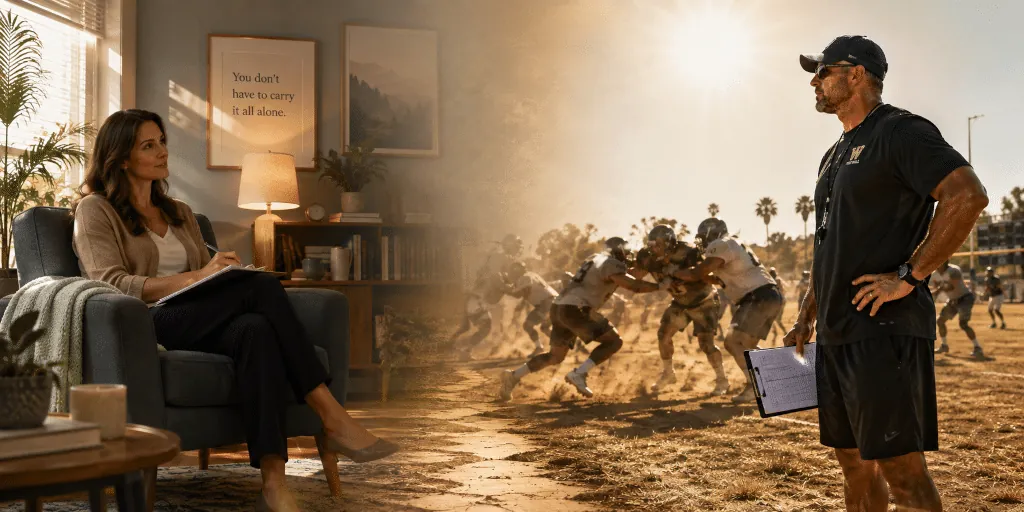
Think of a personal trainer and a physical therapist. A personal trainer helps you build strength and reach fitness goals when your body is already healthy. A physical therapist helps you heal an injury, reduce pain, and restore function when something is wrong.
Couples coaching is like the personal trainer for your relationship. Couples counseling is like the physical therapist. Both are valuable. But they are not interchangeable. If you try to rehab a torn ligament with a workout plan, you risk making the injury worse. The same is true when you use coaching to address emotional pain that needs clinical care.
The bottom line: Counseling is clinical care. Coaching is personal development. Knowing which one you need changes everything about who you hire.
What Is Couples Counseling?
I provide couples counseling as a licensed mental health professional. In Ohio, that means I hold a graduate degree, completed thousands of hours of supervised clinical work, passed a state-approved exam, and follow ethical and legal standards set by the state board. The same is true for any Independent Marriage and Family Therapist (IMFT), Marriage and Family Therapist (MFT), Licensed Professional Clinical Counselor (LPCC), Licensed Professional Counselor (LPC), Licensed Independent Social Worker (LISW), or psychologist you might see.
Because couples counseling is clinical, it can help you address deeper emotional and relational patterns, things like painful cycles that keep repeating, disconnection and resentment, and anxiety, depression, or trauma that shows up inside the relationship. For a full picture of what couples counseling addresses, see the couples therapy page.
Does couples counseling actually work? Research says yes. For couples using Emotionally Focused Therapy, 86 to 90 percent show significant improvement over the course of treatment, and 70 to 73 percent move from distress to full recovery. EFT is one of the most studied approaches in couples counseling, and those numbers are hard to ignore.
When it comes to couples in Columbus, I often see stress from parenting, work, finances, or caregiving bleed into the relationship and make everything feel heavier. Counseling gives you a place to untangle that.
What Is Couples Coaching?
Couples coaching tends to be goal-oriented and skills-based. A coach might help you:
- Practice communication techniques
- Set shared relationship goals
- Make decisions together
- Build habits that prevent conflict
- Prepare for marriage, parenting, or a relocation
Coaching can work well when the relationship is healthy and you simply want to be more intentional.
But I need to be clear about what coaching cannot do. A coach is not trained or licensed to diagnose or treat mental health conditions. Coaching is not designed to heal betrayal, repair deep trust wounds, address trauma, or ease the effects of neurodivergence or personality issues.
When a couple comes to me after coaching, they often say the same thing: “We learned some good tools, but the same fights kept coming back.” That is because the tools were landing on top of pain that needed to be addressed, not just managed.
The Biggest Difference: Clinical Care vs. Personal Development
Counseling is clinical care. Coaching is personal development. Both can be useful, but you need to know which one fits what you are actually dealing with.
Here is a quick way to orient yourself:
| If you are dealing with | Better fit |
|---|---|
| Ongoing painful conflict | Couples counseling |
| Trust repair after betrayal | Couples counseling |
| Anxiety, depression, trauma, or grief affecting the relationship | Couples counseling |
| Emotional shutdown or recurring arguments | Couples counseling |
| Communication skill-building | Couples coaching or counseling |
| Shared goals and relationship planning | Couples coaching |
| Premarital preparation | Coaching or counseling |
| Mild conflict in an otherwise stable relationship | Coaching or counseling |
Many couples I see in Columbus fall somewhere in the middle. They think they just need better communication, but underneath that are years of hurt that a worksheet will not touch. Starting with a licensed counselor means you get clarity on which problem you are actually solving. Always remember, counseling is for mental health issues, pain, trauma, and personality differences. Coaching is for self improvement.
When Couples Counseling Is the Better Choice
The clearest sign is this: if the same fight keeps coming back no matter what you try, the problem is not the topic you are arguing about. It is what is underneath it.
I once saw a couple who argued every holiday about whose family to visit. They thought it was a scheduling problem. It was not. Underneath the calendar was a deeper pain: each partner felt secondary to the other’s family. They felt unloved. A coach could have helped them design a fair rotation. That would have managed the symptom. Counseling let them heal the feelings and wounds that drove the fight, which meant the rotation became easy to agree on.
The same pattern shows up with emotional safety, betrayal, mental health symptoms, and relationships that feel close to ending. These are not communication problems. They are clinical ones, and they need clinical care.
If any of that sounds familiar, couples therapy or marriage counseling is the better starting point. When trauma is part of the picture, I often bring in EMDR therapy alongside the couples work.
When Couples Coaching May Be Enough
Coaching can be a good fit when the relationship is not in crisis. Here are the conditions I look for in order for coaching to be appropriate:
- Both partners feel emotionally safe and respected.
- There is no untreated trauma, addiction, abuse, personality issues, or mental health concerns driving the conflict.
- You want practical communication tools and accountability.
- You are preparing for a shared decision or life transition.
Even then, I recommend being cautious. A lot of couples come to me after realizing the communication issue was actually a trust issue wearing a different mask. If you want to explore the structured, skills-based side of counseling before committing to coaching, take a look at the best therapy for couples communication problems.
When couples feel emotionally disconnected or stuck in the same painful cycle, Emotionally Focused Therapy often addresses the root of what coaching only organizes. And for couples who need practical conflict repair tools within a safe clinical frame, Gottman Method Couples Therapy delivers the kind of structure many people hope coaching will provide.
Why Licensing Matters in Ohio
Many couples do not know this, and I think you should before you choose.
n Ohio, you cannot practice professional counseling, social work, or marriage and family therapy for pay without a license. Chapter 4757 of the Ohio Revised Code makes that clear.
That is not just paperwork. A license means a professional met real standards. To become an IMFT in Ohio, a therapist must earn a graduate degree with at least 60 semester hours of approved coursework. That degree includes supervised clinical hours. After graduation, they pass a national board exam. Then they complete 1,000 hours of post-degree client contact and 200 hours of face-to-face supervision, including 100 hours of individual supervision before they earn full licensure. They stay accountable to a state board for their entire career.
They can only work within their scope of practice under Ohio laws and rules. That means they need the right training or supervision before using any method with a client. As an IMFT, I also have to uphold our professional code of ethics.
Coaching does not have those same protections. That does not make coaching bad. It does mean the safety net is thinner, and you deserve to know that before you choose.
What If We Are Not Sure Which One We Need?
Uncertainty is not a weakness. It is often a sign that your relationship has both practical and emotional layers that need sorting.
When you are not sure, start with a licensed professional. A therapist can help you understand whether your concerns are clinical, relational, practical, or a mix. If coaching is truly the right next step, you can feel safe moving forward with it. You do not have to figure out the difference on your own.
One thing worth knowing: more couples are seeking help earlier now, before things reach a breaking point. That is a good shift. The earlier you address what is happening, the easier it is to work through.
Questions to Ask Before Choosing Someone in Columbus
Before you hire anyone, here are questions I would want you to ask. A trustworthy professional will answer them without hesitation.
- Are you a licensed mental health professional in Ohio?
- What is your experience working with couples?
- Do you offer counseling, coaching, or both?
- How do you handle high-conflict conversations?
- What is your training to work with couples?
- Do you work with anxiety, trauma, grief, or betrayal when those affect the relationship?
- Do you work with people who have personality issues or neurodivergence?
- Can you provide faith-based or non-faith-based help with our relationship?
- Can you hold space for a couple like us, meaning our demographics, culture, and background?
- Do you offer in-person sessions in Columbus or telehealth in Ohio?
- Do you have availability that fits my schedule, such as evenings or weekends?
- Are you currently taking new clients, or is there a waitlist?
- What should we expect in the first session?
Couples Counseling or Coaching: Which Should You Choose?
If your relationship needs skill-building, coaching may help. If it needs healing, counseling is the better choice. Most couples are not sure which one they need, and that is exactly what a first session is for.
Couples Counseling in Columbus, Ohio
If you and your partner are feeling stuck, disconnected, or unsure where to begin, couples counseling can help you slow down the pattern and start having different conversations. At Revitalize You, I offer support for individuals and couples in the Columbus, Ohio area who want a calmer, healthier way forward.
I provide in-person appointments in Columbus and online therapy throughout Ohio for couples who need flexibility. If you are not sure whether counseling or coaching fits your situation, schedule a consultation. We can talk through your next step together.
Frequently Asked Questions
Is couples coaching the same as couples counseling?
No. Counseling is provided by a licensed mental health professional and can address emotional, relational, and clinical concerns. Coaching focuses on goals, skills, and practical development. A coach cannot diagnose or treat a mental health condition.
Is couples coaching regulated in Ohio?
No, not the same way counseling is. Ohio law sets clear standards for licensed counselors and marriage and family therapists. They must meet education, supervision, and ethics requirements. Coaches do not have those same rules.
Should we choose counseling if we are not in crisis?
Yes. Coming in before things fall apart actually makes the work easier and faster. Counseling can improve communication, rebuild closeness, and shift patterns early. You do not have to wait until you are in crisis.
Can couples counseling help with communication?
Yes. We look at what you are saying and what is underneath it. The emotions, assumptions, and history driving the words are where real change happens.
What if my partner wants coaching but I want therapy?
Talk about the outcome you both want. If either of you feels overwhelmed, hurt, or thinks something deeper might be going on, start with a licensed counselor. I can help you figure out what kind of support fits.
