
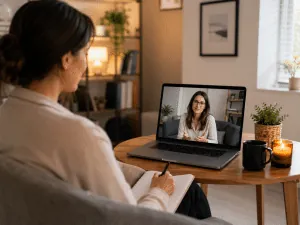
TL;DR: Online therapy in Ohio can work well if you have privacy, reliable internet, and concerns that can be treated safely through video sessions. It may be especially helpful for busy schedules, rural clients, disability barriers, or people who want specialized care without commuting. In-person therapy may be better when privacy, safety, technology, or comfort with video is a concern.
How to Decide Whether Online Therapy in Ohio Is Right For You
Online therapy in Ohio may be a good fit if you have privacy, reliable internet, and concerns that can be treated through video sessions. You also need a therapist who is allowed to work with clients in Ohio. In-person therapy may be better if you do not have a private place to talk, need more direct support, have unreliable internet, or connect better face to face.
Decision Table for Online Therapy vs. In Person Therapy In Ohio
| Factor | Online Therapy May Fit Better When | In Person Therapy May Fit Better When |
| Privacy | You have a private, controlled location | Others may overhear or interrupt |
| Internet | Your internet and device are reliable | Connections frequently fail |
| Support needs | Your therapist confirms remote care is appropriate | You need more direct support |
| Comfort with video | You connect comfortably through video | You connect better face to face |
| Travel | Travel, disability, childcare, or distance creates barriers | Traveling to an office is manageable |
| Type of therapy | The clinician is trained to provide the method remotely | The method requires equipment or observation unavailable remotely |
| Schedule | Online appointments are easier to find | Office scheduling is equally workable |
This table is a starting point. A licensed therapist should evaluate whether telehealth is right for your needs.
What Online Therapy Involves
Online therapy is any therapy with a licensed clinician done via video, phone, or a secure message system instead of a visit to a physical office. Therapists should use a secure system that protects your privacy. Depending on the therapist’s rules, you may be able to join from home, your car, your office, or another private location. Some allow you to take sessions from any place you can have privacy and a stable internet connection. I have had clients log on from places such as alone by a lake near their home, or in their car at lunch time. What was important to me was they were comfortable, the connection was stable, and they wouldn’t be interrupted.
The session length, session frequency, and treatment style are often the same as in-person sessions. How the therapy is delivered changes, but the work does not.
Ohio therapists offering telehealth often have the same range of specialties found in traditional offices: EMDR, Gottman Method couples counseling, Emotionally Focused Therapy, family therapy, DBT, and hypnotherapy among them. Licensing rules require your therapist to hold a license in the state where you are physically located during the session, not the state in which you live, so confirm your provider carries an active Ohio license before you book your session.
Signs Online Therapy Fits You
Clients who do well with virtual therapy sessions often have a few things in common. If any of this sounds like you, telehealth sessions may be a good fit for you:
- You have a busy schedule. Between work, childcare, and other obligations, driving to an office and back wastes time you don’t have. A remote therapy session saves the commute time to and from the therapy office.
- You aren’t in a major city. People in rural parts of Ohio may have to travel a long distance for specialized care. I have worked with couples who drove two hours because they could not find the right therapist near home. Online therapy in Ohio can remove that travel barrier.
- You have an easier time discussing some topics from your own space. Some clients speak more freely in their own living room than in an unfamiliar office.
- You travel often within the state or split time between locations. Telehealth keeps your ability to have appointments consistent when where you are changes from week to week. As long as you are in Ohio during each session, your location does not matter.
- You want to start counseling without a long wait for an in-person opening. Some therapists have more openings for online sessions than office visits, which may help you start sooner.
- You manage a physical limitation, chronic condition, high anxiety or agoraphobia. A commute or in-person visit adds strain some clients do not need on top of an already demanding condition. I have worked with several clients whose agoraphobia was what we were treating. Requiring them to leave the house to get therapy would have been a barrier to them getting the help they needed.
Signs In-person Therapy Serves You Better
Virtual sessions are not the right fit for every situation or every client. The following are some signs that you might be better off with in-person therapy sessions:
- You need more direct support. In-person care may be better if you have serious safety concerns or need your therapist to watch your symptoms closely. In-person care gives your provider more information through direct observation and the ability to respond in the moment if a crisis develops.
- You do not have private space. Therapy works best when you can speak openly without the worry that other people will overhear or interrupt. If privacy at home or other places where you might join a virtual session is limited or impossible, an office visit protects your confidentiality.
- You have unstable internet or lack access to a phone or computer that can adequately run the session. Dropped calls and frozen video can disrupt the flow of a session or even make it impossible to continue. This can add frustration to an already difficult process.
- You process information or connect better through face-to-face conversation. Some clients read body language, tone, and presence more clearly face to face. If eye contact and physical presence are critical to your comfort or ability to trust your therapist, let them know during your first conversation.
- Some types of therapy work better in an office. Ask your therapist directly whether your treatment plan or the type of therapy you will be getting depends on an in-person format.
Can My Therapist Work With Me In Ohio?
In most cases, therapy rules are based on where you are during the session. If you are in Ohio, make sure the therapist is allowed to provide care in Ohio. You can ask the therapist or check their license through the proper Ohio licensing board.
Questions To Ask Before You Start
When deciding on virtual or in-person visits, you will want to ask the provider some specific questions. Bring these questions to a consultation call before you commit to a telehealth-only provider.
- Are you allowed to provide therapy in Ohio? State licensing boards require this no matter where the therapist is physically located.
- Have you treated concerns like mine? Ask whether the therapist has experience with your concern and the type of therapy you may need.
- How do you protect my privacy? Ask directly. The therapist should be able to clearly explain how they protect your privacy.
- What happens if the video call drops? A clear backup plan, such as a phone call, secondary telehealth platform, or reschedule policy keeps a technical issue from derailing your progress.
- What does each session cost? Ask directly about price per session. If there is a difference between types of therapy a clinician offers (individual vs. family for instance), if there are price differences for virtual vs. in person visits, or any other things that may change price per session.
- Do you accept my insurance? If so, does your insurance cover this particular service? If not, do they offer superbills for out of network billing?
- Can I switch to office visits later? Some therapists do only virtual sessions or offer only limited in-office availability.
Cost And Insurance Considerations
Some insurance plans cover online therapy, but coverage depends on your plan and therapist. Call your insurance company before the first session. Ask whether online mental health visits are covered, whether the therapist is in network, and what you will pay.
If you are paying yourself, ask for the full session price. You can also ask whether the therapist provides a superbill for possible out-of-network reimbursement.
What To Expect In Your First Telehealth Session
One of the most important things to know about teletherapy is what to expect in your first session with your new provider. Here are answers to some of the frequently asked questions about that first therapy session when done online.
- Your first online session will be similar to a first in-person visit. Your therapist reviews your intake paperwork, asks about your history, and outlines the goals driving your treatment. You may want to have some notes ready in advance to keep the session smooth on things like what you want to get out of therapy, and important things you think the clinician needs to know.
- Test your camera, microphone, and internet connection ahead of time. Do not wait until your appointment time. Some telehealth platforms require an app download on the phone, or you may need to change settings on your computer so that you can access them. A quick, five-minute check saves a rushed start or the inability to attend an appointment due to technical issues.
- Pick a place to have the session that is a private room with a door you close. Privacy concerns, background noise and interruptions pull focus away from the therapy process.
- Keep headphones nearby. Headphones cut background sound on your end and keep your conversation private from anyone nearby. It may also be easier to hear your therapist, or for them to hear you when you are using headphones.
- Log in from a phone, tablet, or laptop, not a public computer. Confidentiality depends on having a device only you control. For instance, if you are logging in from work, is your company computer monitored? If so, your telehealth session is not private on that machine and you should take it from your phone or bring a personal laptop or tablet.
- Write down what you plan to cover before the session starts. A short list keeps the conversation on track if you get nervous during your first appointment or sidetracked answering questions.
Which Types Of Therapy Work Online
Many types of individual, couples, and family therapy can be offered online. Some need special tools or changes for video sessions. In my practice, I have used online versions of EMDR, Gottman Method, DBT, family therapy, and hypnosis. Ask whether your therapist has experience providing your type of therapy online.
Frequently Asked Questions
Is online therapy as effective as in-person therapy?
It can be. Online therapy works well for many people, but it is not right for everyone. Results can depend on your needs, therapist ability to connect via video, privacy, internet connection, and type of therapy.
Does my therapist need an Ohio license?
Yes. Your therapist needs an active license to practice in Ohio.
What equipment do I need?
A private space, a stable internet connection, and a phone, tablet, or laptop cover the basic requirements for most telehealth platforms.
Can I switch between online and in-person therapy?
That depends. Many practices offer a hybrid model, letting you schedule a mix of virtual and in-person sessions based on your week and your treatment goals. However, some therapists practice only virtually, so you will want to check with your therapist ahead of time.
Getting Started With Online Therapy In Ohio
Deciding between online and in-person care comes down to your schedule, your comfort level, your home environment, and the type of support you need. Many clients find a hybrid approach works well too, starting with a mix of virtual and in-person sessions and adjusting as treatment moves forward.
Revitalize You offers online therapy across Ohio and in-person therapy in Columbus. Some clients choose a mix of online and office visits. Contact us to meet our therapists, discuss your needs and decide which format may fit you best.
